
Bali Wedding Videography Guide in 2026
A Bali Wedding Videography Guide — 2026
Wayan Parmana — Professional Bali Wedding Videographer, Photographer & DGCA-Licensed Drone Pilot. 12+ years, 500+ love stories filmed across Bali.
A photograph freezes a heartbeat — but a wedding film gives you back the sound of the room. The laughter. The happy tears. The whispered vows. That’s why I do this.
A wedding film lets you relive those whispered vows — on repeat, for the rest of your life.
Key Takeaways — Four Things to Remember
1. The Experience
A Bali wedding film isn’t just documentation — it’s a cinematic narrative that captures the sounds, the emotions, and the atmosphere of your day in ways photographs alone simply can’t.
2. 2026 Investment
Bali wedding videography ranges from $450 (3-hour basic coverage) to $5,000+ (multi-day cinematic packages with drone, same-day edit, and social reels).
3. Booking Window
The best Bali wedding videographers book 9–12 months in advance. Dry season (April–October) fills fastest.
4. The 2026 Shift
Couples now want three deliverables: a cinematic highlight film, a long-form documentary edit, and vertical social media reels for Instagram and TikTok.
Last updated · May 2026
Introduction — Why Your Bali Wedding Deserves a Film, Not Just Photos.
Let me tell you something I’ve learned after filming more than 500 weddings in Bali: couples almost never regret hiring a videographer. But they very often regret not hiring one.
Here’s the truth — your wedding day moves fast. Impossibly fast. The vows you spent weeks writing? They’ll feel like they lasted twelve seconds. Your father’s speech that made the entire table cry? You’ll barely remember the words because you were too busy living inside the emotion. The way the Uluwatu wind caught your veil at exactly the right moment? Gone. Unless someone was rolling.
That’s what Bali wedding videography is really about. Not just pretty footage set to a piano track. It’s about giving you a time machine. A way to hear your partner’s voice crack on the words “I do.” A way to watch your best friend’s champagne toast — complete with that perfect pause before the punchline — whenever you need a good happy-cry.
I’m Wayan Parmana, the founder of Agra Photo & Film. As a Bali wedding videographer for over 12 years, I’ve filmed in monsoon rain and golden light, in bamboo chapels and five-star ballrooms, in two-person elopements and 400-guest celebrations. This guide is everything I know about creating a wedding film you’ll watch a hundred times and still feel something on the hundred-and-first.
And if you’re also looking for photography guidance, check out our complete Bali wedding photography guide — it pairs perfectly with this one.
Wedding Videography Styles — Which One Fits Your Love Story?
Not all wedding films look the same — and they shouldn’t. The style of your wedding video shapes how your story feels when you watch it back. In 2026, these are the dominant approaches, and understanding them will help you choose the right wedding videographer in Bali for your vision.
Style 01
Cinematic Wedding Films
This is the “movie trailer” approach — and the most requested style in Bali right now. Cinematic wedding films use intentional camera movement, creative lens work (bokeh, lens flare, focus pulls), non-linear editing, and a carefully selected soundtrack to create something that feels like a short film. Your 10-hour wedding day becomes a 5-to-10-minute emotional arc, crafted with the same techniques used in actual filmmaking. It’s dramatic, polished, and deeply moving.
Style 02
Documentary-Style Wedding Videos
The opposite of cinematic — but equally powerful. Documentary style captures the day exactly as it unfolds. No staging. No directing. Just raw, real, chronological storytelling. The laughter during getting-ready. The nervous hand-shake during the vow exchange. The uncle who dances like nobody’s watching. Industry data suggests that roughly 79% of couples now request either documentary or photojournalistic-style coverage — authenticity is winning in 2026.
Style 03
Hybrid Films — The Best of Both Worlds
This is what most modern couples end up choosing, and what we specialize in at Agra Photo & Film. Hybrid films blend cinematic visual beauty with documentary authenticity. The ceremony is captured raw and unscripted. The couple portraits are filmed with cinematic intention. The result is a film that’s both beautiful and honest — which is what marriage should be, if you think about it.
Style 04
Social-First Edits — Made for Reels and TikTok
This is the fastest-growing format in 2026 — and if you’re not thinking about it, you probably should be. Social-first edits are specifically shot and edited for vertical 9:16 format, designed for Instagram Reels, TikTok, and YouTube Shorts. These aren’t just cropped versions of your main film — they’re separate, punchy 15-to-60-second clips designed for maximum emotional impact on mobile screens. According to recent industry reports, over 68% of Gen Z couples now prioritize social-first edits over traditional long-form films.
How Much Does It Cost — A Wedding Videographer in Bali, 2026 Pricing.
Let’s talk numbers. Wedding videography pricing in Bali varies widely depending on experience, equipment, crew size, and deliverables. Here’s a realistic breakdown for 2026:
| Package Tier | Duration | USD Range | What You Get |
|---|---|---|---|
| Basic / Elopement | 3 hours | $450–$750 | 1 videographer, 3–5 min highlight film |
| Standard Half-Day | 4–6 hours | $750–$1,500 | 1–2 videographers, highlight + ceremony edit |
| Full-Day Coverage | 8 hours | $1,500–$2,500 | 2 videographers, drone, highlight + full documentary |
| Premium Cinematic | 12+ hours | $2,500–$5,000+ | Full team, drone, same-day edit, highlight + documentary + social reels |
| Multi-Day (Indian/3-day) | 2–3 days | $3,500–$8,000+ | Full crew, all ceremonies, drone, multiple edits |
Extras to budget for — drone add-on (~$200–$400 if not included), same-day edit (~$300), overtime (~$130–$160/hour), Super 8 film coverage (~$500+), travel fees for remote East/West Bali venues.
For our specific packages and what’s included in each, visit the Agra Photo & Film pricing page.
How to Choose — The Right Wedding Videographer in Bali.
This is one of the most important vendor decisions you’ll make — and yet most couples spend less time choosing their videographer than choosing their cake. Here’s my honest advice on what to look for:
Tip One
Watch Full Wedding Films, Not Just Highlight Reels
Any videographer can cut together a 90-second Instagram reel that looks gorgeous. The real test is the 15-minute documentary edit. Can they sustain emotional storytelling across the full ceremony? Is the audio clear? Do the speeches sound professional or muffled? Watch at least two to three full wedding films before deciding.
Tip Two
Prioritize Audio Quality
This is where many Bali wedding videographers fall short — and it’s a dealbreaker. Your vows, your speeches, the officiant’s words — these are the heart of your wedding film. At Agra Photo & Film, we use three camera angles for ceremonies and place wireless lavalier microphones on both the officiant and the groom. This gives us broadcast-quality sound of every word spoken. Always ask your videographer about their audio setup — if they only use the camera’s built-in mic, that’s a red flag.
Tip Three
Look for Bali-Specific Experience
A videographer who knows Bali understands that the wind at Uluwatu will destroy audio without proper wind shielding. They know that Ubud jungle venues lose light fast under the canopy. They know the golden hour timing at different venues — and plan accordingly. Local experience isn’t a nice-to-have. It’s essential.
Tip Four
Ask About Deliverables and Timeline
In 2026, standard professional deliverables should include: a cinematic highlight film (3–7 minutes), a full ceremony + speeches edit, and ideally 2–3 vertical social media reels. Ask about delivery timeline too — with AI-assisted editing workflows, most professional teams now deliver highlight teasers within 2–4 weeks and full films within 6–8 weeks.
Tip Five
Book 9–12 Months in Advance
The best Bali wedding videographers book fast, especially for dry season (April–October). August and September fill up first. Don’t wait.
Planning Your Videography — A Step-by-Step Timeline.
Great wedding films don’t happen by accident. They happen because the couple and the videographer planned together. Here’s the timeline I recommend:
One Month Before
Build the Vendor Master List
About four weeks out, everything starts coming together. Create a master list of every vendor — caterer, florist, MUA, photographer, videographer, wedding planner — and share it with everyone. This way, your vendor team can coordinate directly. Your videographer needs to know what time the ceremony starts, where the getting-ready suite is, and whether there are any surprises (readings, soloists, special rituals) planned during the ceremony.
Pro tip — Nothing derails a wedding film like a surprise. If there’s a special reading, a cultural ritual, or a flash mob dance — tell us in advance so we can position our cameras and microphones correctly. Once the ceremony starts, there are no second takes.
Two Weeks Before
Timeline Walkthrough
Sit down (virtually or in-person) with your videographer, photographer, and wedding planner to finalize the day’s timeline. The most important decision? When to schedule your couple session. We always recommend a first-look session plus a sunset session — this gives us two different lighting conditions and two different emotional registers to work with in the final film.
The Morning Of
The Getting-Ready Details
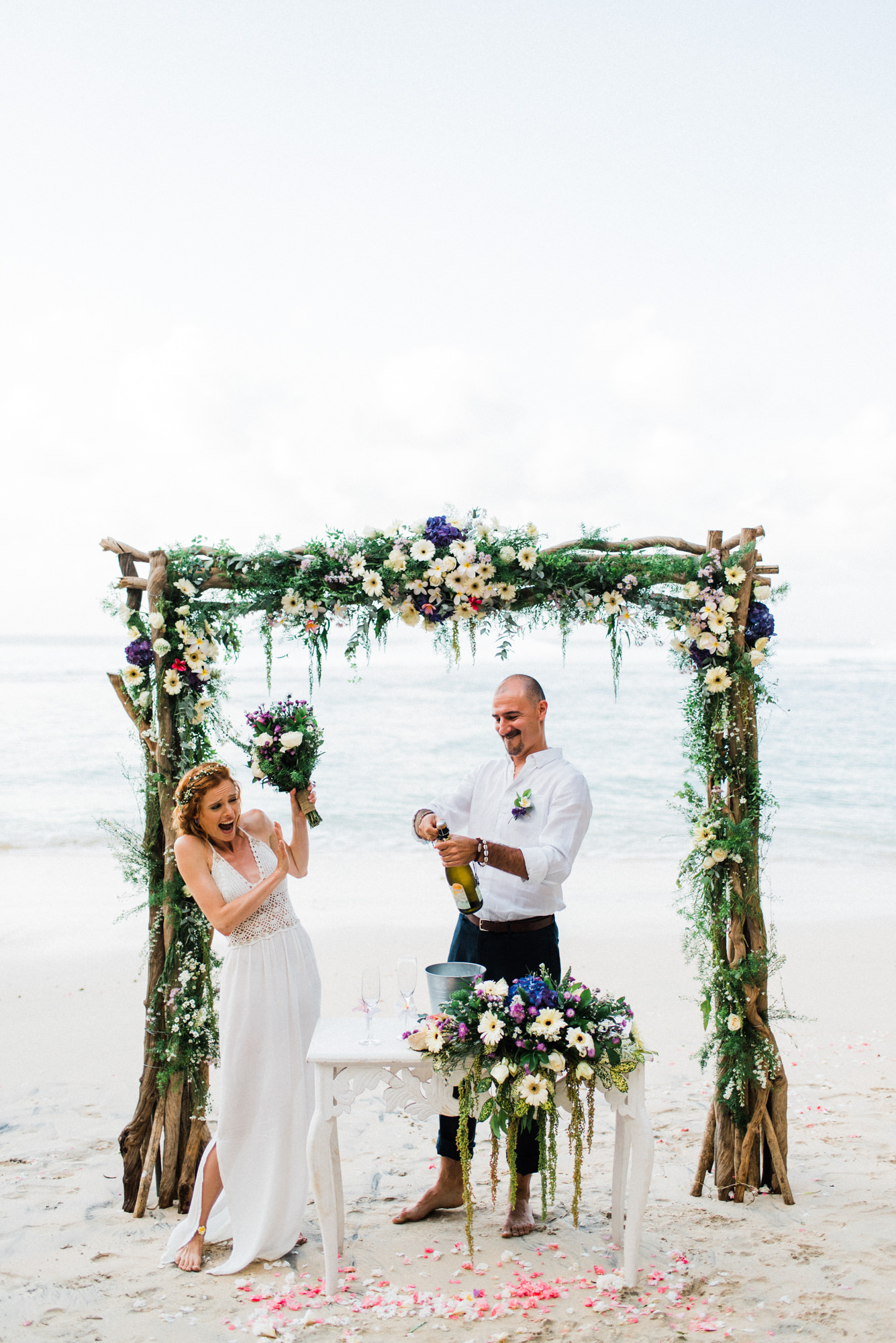
Getting-ready footage is some of the most emotional material in any wedding film. Here’s how to make it great:
Choose a room with natural light
Window light is the most flattering for both video and skin tone. If you’re getting ready in a hotel, ask which room has the best windows — some suites are dramatically better than others.
Prepare a “details box”
Put your rings, shoes, invitation, garter, perfume, and any special jewelry in one beautiful box. Hand it to your maid of honor before we arrive. This saves us from hunting for scattered items across the suite — and means we capture those detail shots quickly and beautifully.
Give us the emotion, not the performance
The moment the bride sees herself in the mirror for the first time. The groom adjusting his tie while his hands shake slightly. That’s what makes a wedding film unforgettable.
The First Look — The Most Cinematic Moment of Your Day.
About 75% of our couples in Bali choose to do a first look — and every single one of them is glad they did.
It’s not just beautiful footage. It’s a pressure-release valve for the entire day. The first look — that moment when you see your partner fully dressed, in the venue, before anyone else does — is consistently the most emotionally powerful sequence in any wedding film we create. Here’s why I always recommend it:
Reason 01 — Anxiety Relief
It relieves anxiety. You get to see your person, breathe, hug, cry (if you need to), and recenter before the ceremony intensity begins.
Reason 02 — Two Lighting Moods
It gives us two filming windows — a pre-ceremony couple session in soft afternoon light, and a quick 15-minute sunset session after the ceremony. Two lighting moods = a richer, more dynamic final film.
Reason 03 — Private Time
It gives you private time together. No audience. No pressure. Just you and the person you’re about to marry, standing in one of the most beautiful places on Earth.
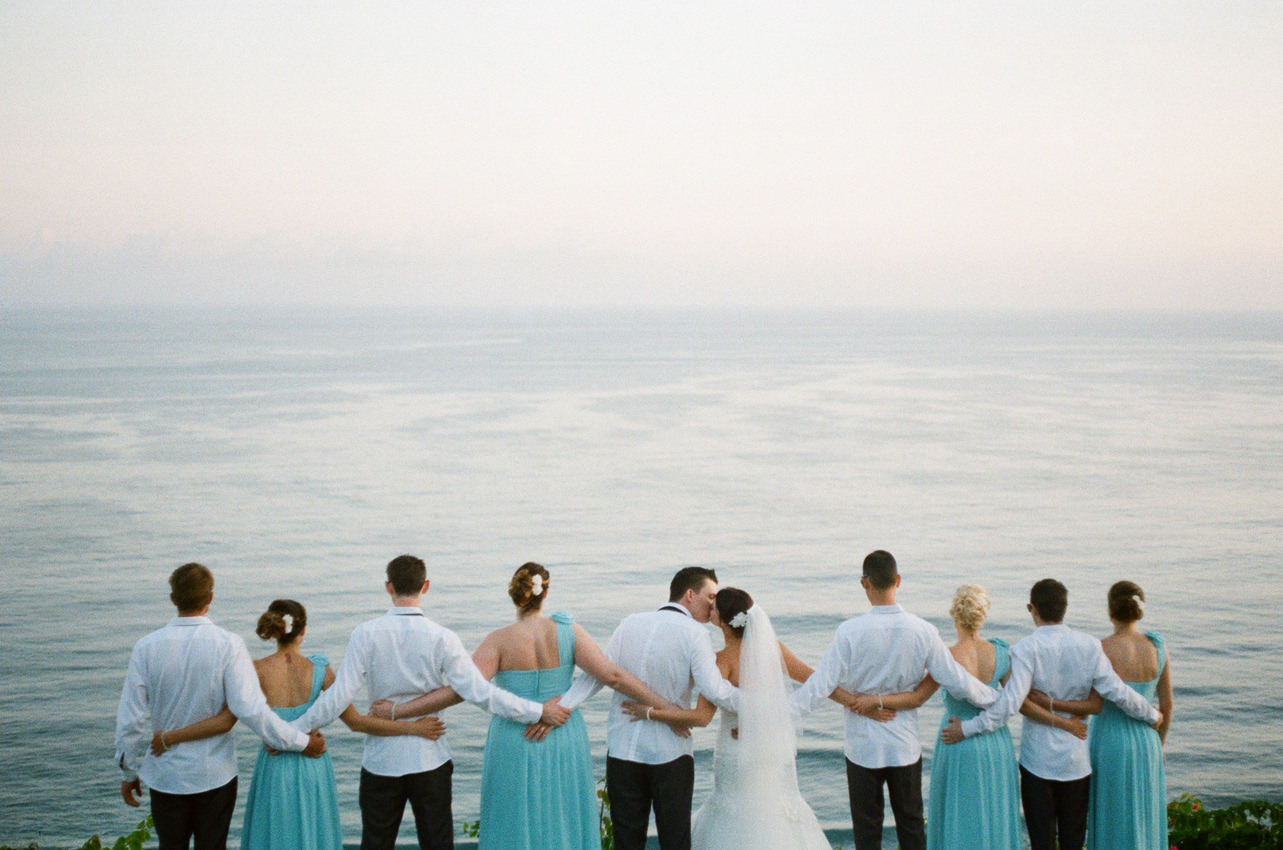
If you’re planning a first look, coordinate the location with your couple photoshoot so both your photographer and videographer can capture it simultaneously without getting in each other’s frames.
How We Film — Your Bali Wedding Ceremony.
The ceremony is the emotional center of your wedding film. It’s the part you’ll rewatch most. And it’s the part that requires the most technical precision from your Bali wedding videographer. Here’s how we approach it at Agra Photo & Film:
Method 01
Three Camera Angles
One locked on a tripod for a wide establishing shot. One handheld on the couple’s faces for close-ups. One roaming for guest reactions, details, and alternative angles.
Method 02
Wireless Audio
Lavalier microphones on both the officiant and the groom. This captures every word in broadcast quality — even outdoors in windy Uluwatu conditions. We also use wind shielding on all external mics because Bali’s coastal venues can be brutal on exposed audio.
Method 03
No Intrusion
We position ourselves before the ceremony begins and stay there. You won’t see us walking across the aisle or popping up behind the officiant. We’re ghosts with very good equipment.
Important — If you’re having readings, live music, a cultural blessing, or any non-standard ceremony elements — tell us in advance. We need to know where to place microphones and cameras. Surprises in ceremonies are beautiful for the couple. They’re nightmares for videographers.
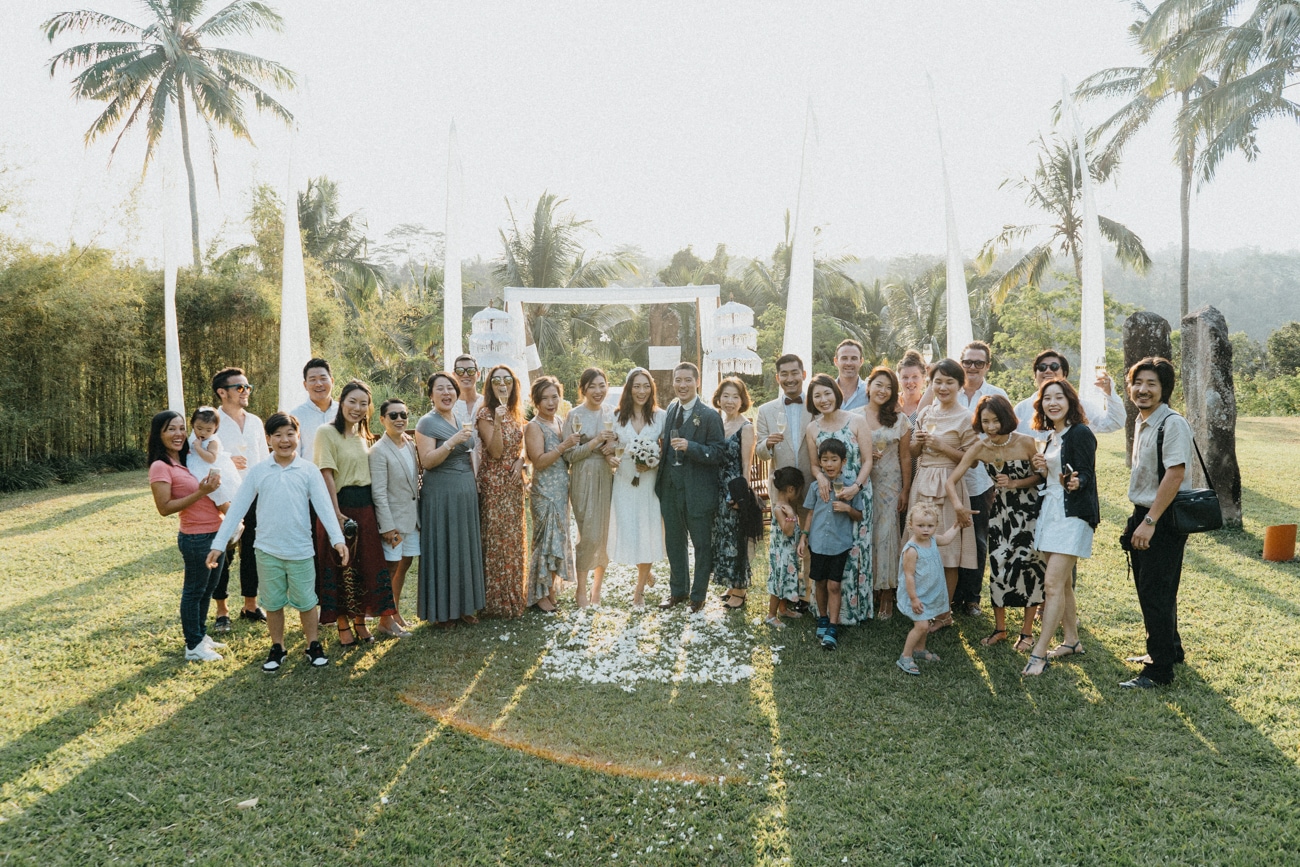
Ceremony at Alila Ubud — three camera angles, wireless audio, no intrusion.
Filming the Reception — Speeches, and the Grand Exit.
The Reception
Where Energy Meets Emotion
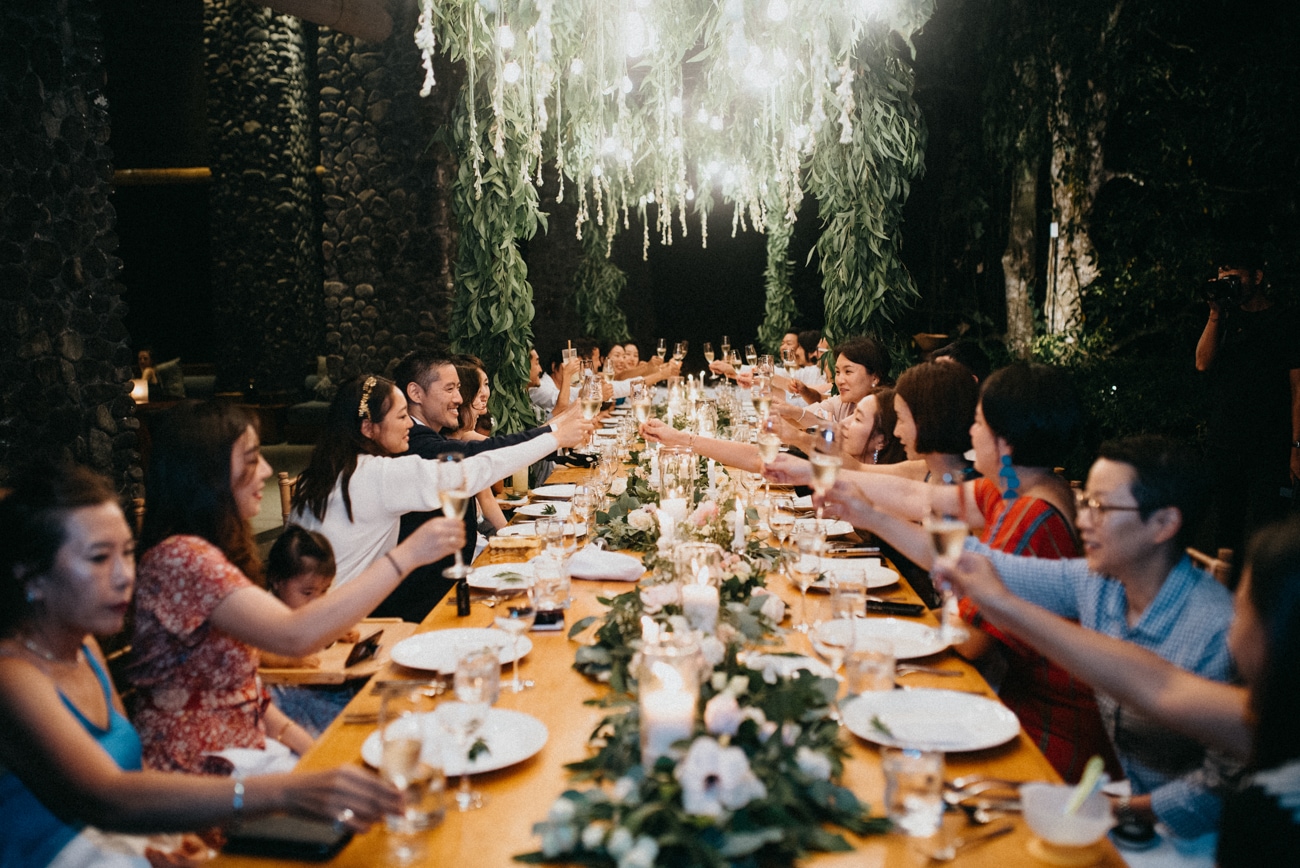
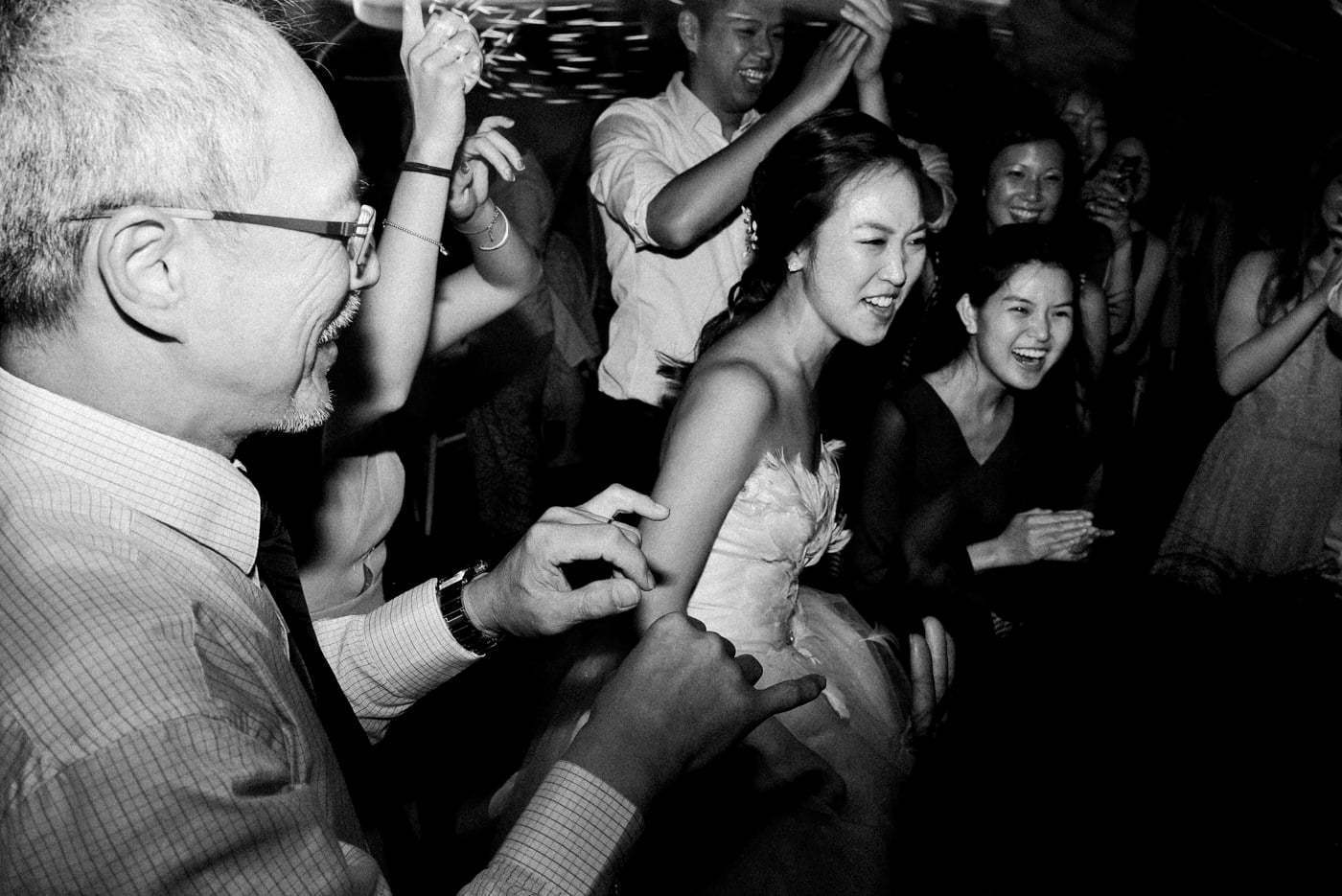
The reception is where your wedding film shifts gears — from intimate and emotional to loud, joyful, and chaotic (in the best way). We capture the table settings and décor before guests arrive, then switch to candid mode for the first dance, the speeches, the cake cutting, and the dance floor madness.
Speeches are critical — We mic every speaker individually. If your maid of honor is giving a speech, she gets a mic. Your dad? Mic. Best man’s rambling, hilarious, slightly inappropriate toast? Mic. Clear speech audio is the difference between a wedding film you cry watching and one you can barely hear.
The Grand Exit
Your Final Cinematic Moment
Sparklers, flower petals, bubbles, streamers — whatever your exit style, this is one of the most visually spectacular moments in any wedding film. My one piece of advice: stop in the middle for a kiss — or better yet, the classic dip-and-kiss. With sparklers framing the shot and your guests cheering in the background, it creates a closing sequence that feels like the final frame of a movie.
The dip-and-kiss — framed by sparklers, the final frame of your wedding film.
Trends to Know in 2026 — Bali Wedding Videography Today.
The wedding film industry is evolving fast — and Bali, as a global destination wedding hub, is at the forefront. Here are the trends shaping how couples are choosing to document their day this year:
01
Same-Day Edits — Watch Your Film at Your Reception
Imagine this — your videographer spends the morning filming your getting-ready and ceremony, then hands off the footage to an editor who produces a 3-minute highlight film that plays on a screen during your reception dinner. Your guests watch your day unfold as it happened just hours ago. It’s the single most emotional moment I’ve seen at receptions — and it’s becoming a must-have in 2026.
02
FPV Drone Sequences
Standard drone shots show your venue from above. FPV (first-person view) drones fly through your venue — swooping through the archway, over the pool, circling the couple — in one seamless, breathtaking take. It looks like something from a Hollywood production, and it’s still rare enough in Bali to make your film genuinely unique. Note: all drone footage in Bali requires a DGCA-licensed pilot — read about the updated 2025 drone regulations here.
03
Super 8 and Vintage Film Footage
The analog revival is real. Some couples are hiring separate Super 8 film shooters alongside their digital videographer. The result? A warm, grainy, nostalgic layer woven into the modern cinematic edit. It looks like a love letter from the 1970s, but with better composition. Film forces presence — every frame costs money, so nothing is wasted.
04
Audio Guestbooks
Instead of a traditional guestbook, couples set up a vintage rotary telephone where guests pick up the handset and leave a voicemail — advice, memories, wishes, drunk declarations of love. Videographers then overlay these audio clips onto slow-motion reception footage. Hearing your grandmother’s voice offering marriage advice over footage of you dancing? That’s the kind of moment that destroys you in the best possible way.
05
AI-Assisted Editing for Faster Turnaround
AI tools are revolutionizing post-production — not by replacing the creative edit, but by accelerating the tedious parts. Automated clip selection, music synchronization, and color-matching mean that in 2026, professional Bali wedding videographers can deliver highlight teasers within 2–4 weeks and full films within 6–8 weeks, down from the traditional 10–16 week turnaround.
06
Dedicated Wedding Content Creators
Separate from your videographer, a content creator captures vertical, behind-the-scenes video specifically for social media — getting-ready clips, candid Reels, TikTok-style snippets. They typically use an iPhone and gimbal, and they give you instant, shareable content. This is the fastest-growing wedding vendor category in Bali for 2026.
Drone Videography at Bali Weddings — What You Need to Know.
Bali’s landscapes — the cliff edges, the rice terraces, the beachfront ceremonies — practically beg for aerial footage. But drone regulations have tightened significantly since January 2025, and it’s essential that your videographer is fully compliant.
Key rules: all drones must be pre-registered with Indonesia’s DGCA (Directive 008/2025), regardless of weight. Maximum altitude is 150 meters. There’s a strict no-fly zone around Ngurah Rai Airport. And commercial drone filming requires an Indonesian Remote Pilot Certificate plus liability insurance.
At Agra Photo & Film — every drone flight is operated by a DGCA-licensed pilot with full insurance — so you can enjoy the aerial magic without worrying about compliance. For the complete breakdown, check the drone regulations section in our Bali wedding photography guide.
Real Bali Wedding Films — Our Portfolio.
The best way to understand what your wedding film will look and feel like? Watch real ones. Here are some of our recent projects across different Bali venues:
Kamandalu Ubud
Wedding Film at Kamandalu Ubud — jungle ceremony, intimate guest list, emotional first look.
Samabe Resort
Cinematic Wedding Film at Samabe Resort — beachfront ceremony, sunset couple session.
Uluwatu Cliff
Elopement Videography at Uluwatu Cliff — two-person ceremony, dramatic drone footage.
Ubud Jungle
Wedding Film in Ubud — documentary-style, natural jungle light.
Alila Ubud
Elopement Video at Alila Ubud — luxury resort elopement, intimate and cinematic.
Intimate Kamandalu
Intimate Wedding Film at Kamandalu — small wedding, big emotions.
Browse our full Bali wedding film portfolio for more inspiration.
Frequently Asked Questions — About Bali Wedding Videography.
Question
How much does a wedding videographer cost in Bali?
In 2026, basic Bali wedding videography starts at around $450 for 3 hours with one videographer. Standard full-day packages (8 hours, 2 videographers, drone) typically range $1,500–$2,500. Premium cinematic packages with same-day edit and social media reels can go up to $5,000+. For our specific pricing, visit our packages page.
Question
Local Bali videographer or bring one from overseas?
Local videographers know Bali’s light, wind conditions, venue logistics, drone regulations, and have established vendor relationships. They also won’t add flight, hotel, and per-diem costs to your bill. Unless you have a deep existing relationship with an international videographer, local is smarter and more cost-effective.
Question
Videographer vs. cinematographer — what’s the difference?
In practical terms, the difference is mostly branding. A “cinematographer” typically emphasizes cinematic storytelling, creative camera work, and film-grade color grading. A “videographer” may lean more documentary. But in 2026, most professional Bali wedding videographers offer hybrid cinematic-documentary coverage. Focus on the portfolio, not the title.
Question
How long is a typical Bali wedding highlight film?
Most highlight films run 3–7 minutes. Feature-length documentary edits (full ceremony + speeches) can run 15–30+ minutes. Social media reels are typically 15–60 seconds each. Together, these three deliverables give you the complete story in different formats.
Question
What equipment should a professional Bali wedding videographer use?
In 2026, industry-standard equipment includes mirrorless cinema cameras (Sony FX3/FX6, Canon R5C, Panasonic S5II), wireless lavalier microphones (Rode Wireless Pro, DJI Mic 2), stabilizers (DJI RS4, Zhiyun Crane 4), and licensed drones (DJI Mavic 3 Pro or Air 3). Ask your videographer about their audio setup specifically — clear speech capture requires dedicated wireless mics, not camera-mounted microphones.
Question
Same company for photography and videography?
There’s a real advantage to this approach. When the same team handles both, they coordinate naturally — no stepping on each other’s shots, no competing for the couple’s time, shared timeline understanding. At Agra Photo & Film, we offer combined photo + video packages that give you seamless coverage and a cohesive visual story across both mediums. Check our wedding photography packages for bundled options.
Question
When should I book my Bali wedding videographer?
9–12 months in advance, especially for dry season (April–October). August and September fill first. If you’ve found a videographer whose work moves you, don’t sleep on it — the best ones don’t stay available long.
A wedding film isn’t a luxury. It’s a legacy.
Let’s Tell — Your Love Story.
It’s the thing your children will watch one day, wide-eyed, seeing their parents young and in love and standing at the edge of a cliff in Bali promising each other forever. It’s the thing you’ll watch on your 20th anniversary, hearing your own voice crack on words you barely remember saying, and feeling every single emotion come flooding back.
That’s what we do at Agra Photo & Film. We make films that make people feel things. If that resonates with you, we’d love to hear your story.